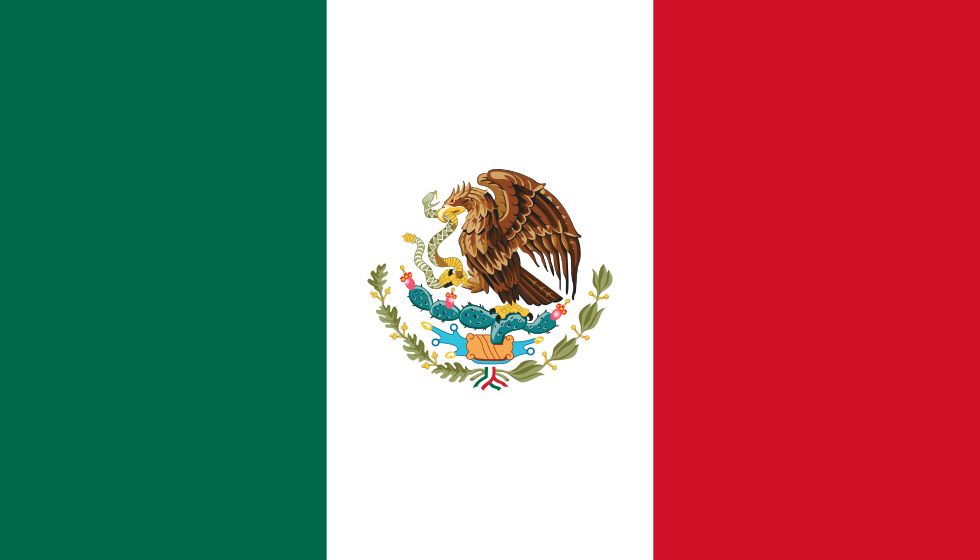
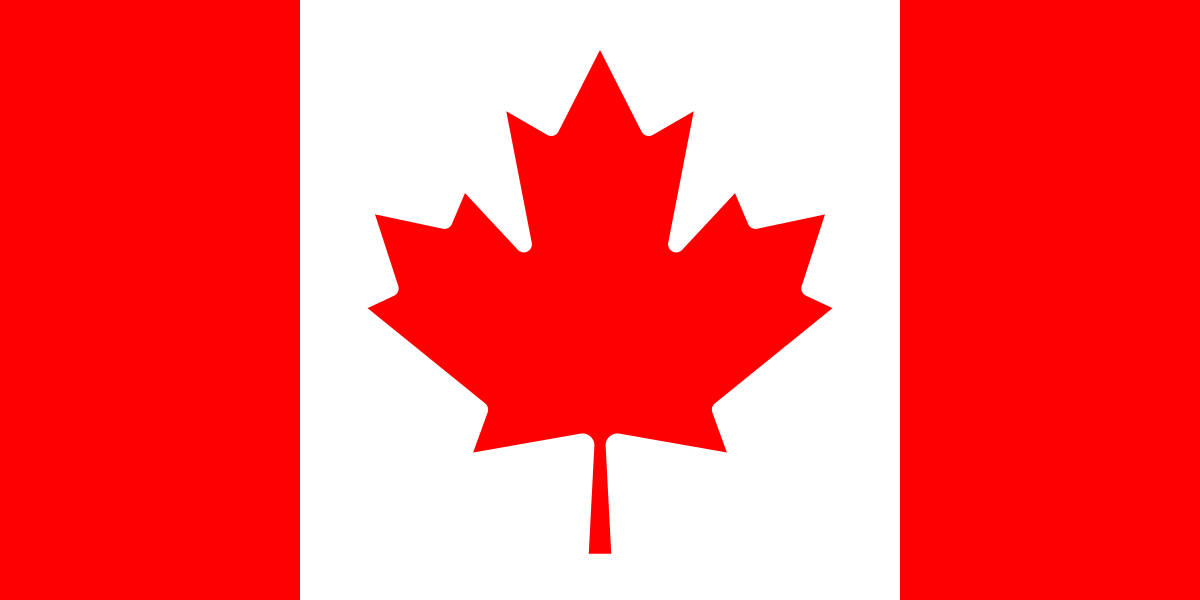
The FIFA World Cup is already on the cusp of a historic transformation. The 2026 edition — spanning the United States, Canada, and Mexico — marks the first time the tournament has expanded to 48 teams. Yet, according to emerging discussions within football's governing circles, 2030 could push the boundaries even further, with proposals for a 64-team World Cup already being floated.


World Cup 2026
Could the FIFA World Cup Expand to 64 Teams by 2030?
1 hour ago·2 min
The FIFA World Cup is already on the cusp of a historic transformation. The 2026 edition — spanning the United States, Canada, and Mexico — marks the first time the tournament has expanded to 48 teams. Yet, according to emerging discussions within football's governing circles, 2030 could push the boundaries even further, with proposals for a 64-team World Cup already being floated.
Such an expansion would nearly double the field from the 32-team format that defined the tournament from 1998 through 2022, and it raises serious questions about feasibility, logistics, and the integrity of the competition itself.
What a 64-team format could look like
A tournament of that scale would demand an enormous organisational effort. More host nations, more stadiums, more matches, and significantly longer tournament windows would all be required. The infrastructure challenges alone would be staggering — no single country, or even a small group of co-hosts, could realistically absorb a competition of that magnitude without years of dedicated preparation.
The match volume would increase dramatically. The current 48-team format already produces 104 matches; a 64-team tournament could push that figure considerably higher, placing fresh strain on player welfare, broadcast scheduling, and the wider football calendar.
What it means for African football
For African football fans, a larger World Cup carries a distinct appeal. CAF's allocated berths have grown with each expansion cycle, and a 64-team field would likely see African nations receive a substantially higher number of qualifying spots — potentially bringing more of the continent's footballing talent onto the world's biggest stage.
Nations such as Nigeria, Senegal, Morocco, Ghana, and Cameroon have historically fought through gruelling qualification campaigns for a limited number of slots. Greater representation could reshape African football's global profile and provide smaller football federations across the continent with genuine hope of competing at the World Cup for the first time.
The debate over quality versus quantity
Critics of further expansion argue that bloating the tournament risks diluting the quality of matches, particularly in the early rounds. Supporters counter that broader participation strengthens the global game and gives emerging footballing nations the platform they need to develop.
FIFA has not confirmed any formal plans for a 64-team World Cup, and the 2030 edition — which is set to be held across multiple continents to mark the tournament's centenary — already presents its own unique logistical complexity. Whether the governing body moves forward with another expansion remains to be seen, but the conversation is clearly already under way.
Comments
Share
Comments
Be the first to comment.