



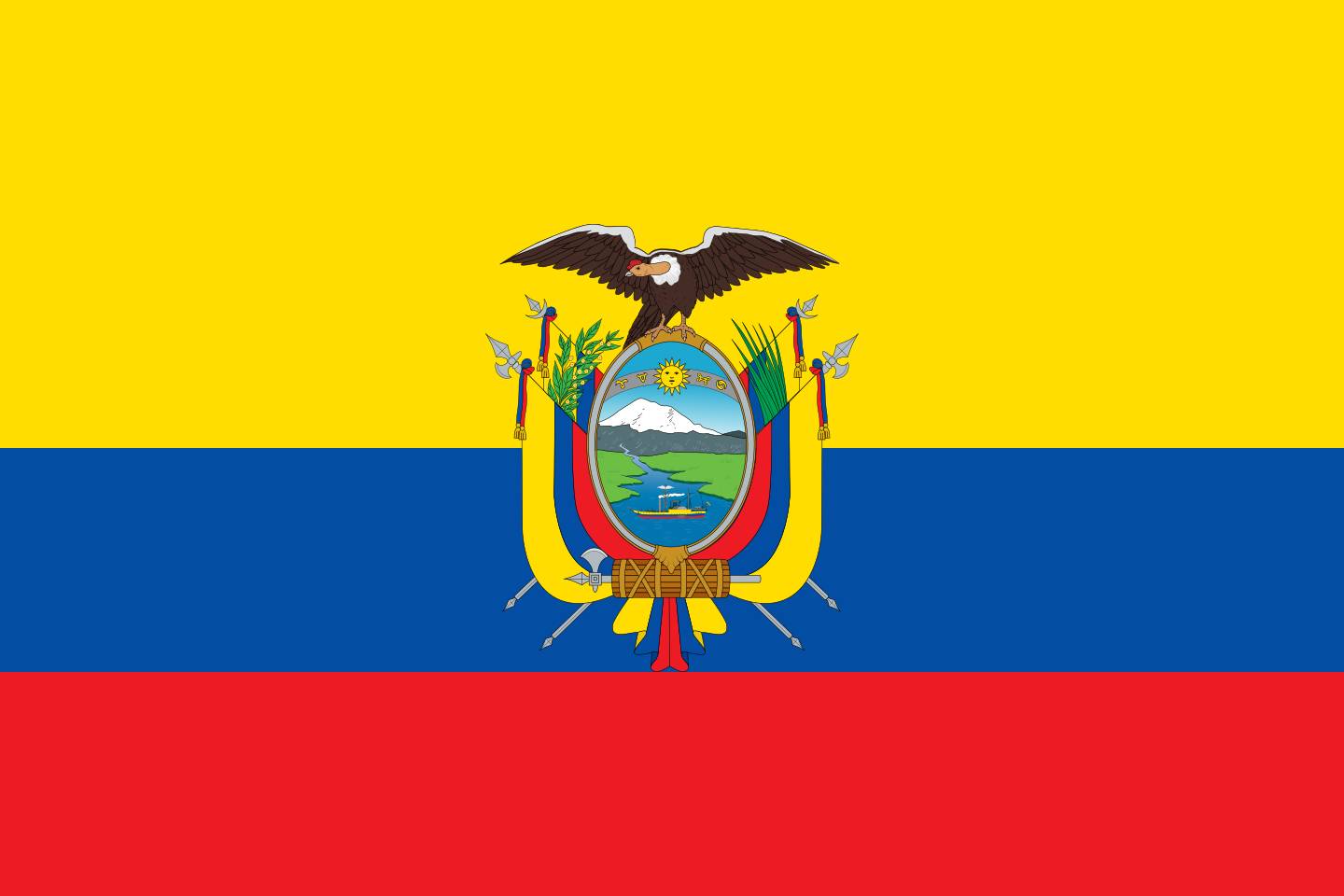






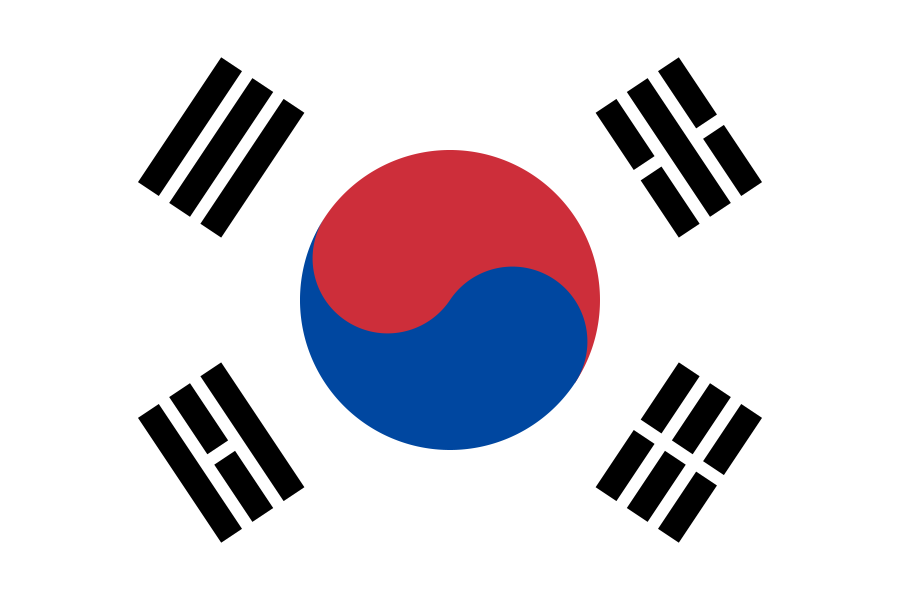
The expanded 48-team World Cup has delivered a wave of upsets, with lower-ranked nations taking points from some of the tournament's heavyweights. Cape Verde, Curaçao, Ghana, and South Africa — ranked 64th, 81st, 65th, and 54th in the world — have each claimed results against Spain, Ecuador, England, and South Korea respectively. These are not mere accidents of fortune. A closer examination of the matches reveals shared tactical patterns that help explain how smaller nations are competing at this level.


World Cup 2026
How Underdogs Are Beating the Giants at the 2026 World Cup
1 hour ago·4 min

The expanded 48-team World Cup has delivered a wave of upsets, with lower-ranked nations taking points from some of the tournament's heavyweights. Cape Verde, Curaçao, Ghana, and South Africa — ranked 64th, 81st, 65th, and 54th in the world — have each claimed results against Spain, Ecuador, England, and South Korea respectively. These are not mere accidents of fortune. A closer examination of the matches reveals shared tactical patterns that help explain how smaller nations are competing at this level.
Refusing to take the bait
Cape Verde's 0-0 draw against Spain — ranked third in the world — stands as arguably the most tactically sophisticated performance of the tournament. The third-smallest nation ever to appear at a World Cup deployed a disciplined 4-5-1 shape, keeping the gaps between their midfield and defensive lines extremely tight.
When Spain passed backwards to invite the Cape Verde midfielders to press higher, Cape Verde refused. Their shape stayed compact. When Spain's defenders carried the ball forward to trigger a reaction, Cape Verde again held their position until late. Denied entry through the block, Spain were limited to moves around or over their opponents.
Ghana applied exactly the same logic against England. Jordan Ayew shadowed Elliot Anderson higher up the pitch, but the rest of Ghana sat in two disciplined lines just outside their own penalty area — passive by design.
The numbers illustrate the point sharply. PPDA — opposition passes allowed per defensive action — measures how aggressively a team presses. The higher the figure, the less interruption a team provides. Cape Verde registered a PPDA of 51.2 in their match against Spain; Spain's was just 5.9. In the first 15 minutes of Ghana versus England, Ghana's PPDA stood at 62. Both sides chose to concede possession almost entirely.
Notably, both Ghana and Cape Verde did press more in the later stages of their matches — a calculated shift to chase the game rather than simply protect a point.
Covering the width of the pitch
Not every low-block strategy is created equal, and Saudi Arabia's defeat to Spain illustrated what can go wrong. Despite fielding five defenders, Saudi Arabia's structure lacked clarity. Their midfield four drifted too far towards the ball-side, leaving the opposite flank exposed.
Spain exploited this repeatedly by switching the ball from left to right. Lamine Yamal and Pedro Porro repeatedly found themselves in two-against-one situations against the Saudi Arabia wing-back. Porro, unmarked and with time on the ball, delivered a cross to the back post — a move that led directly to Mikel Oyarzabal's third goal.
Sweden suffered the same fate against the Netherlands in a 5-1 defeat. With only three midfielders in their 5-3-2 shape, their width coverage was even thinner than Saudi Arabia's. Denzel Dumfries made repeated forward runs from deep that Sweden's midfield three failed to pick up. Sweden recovered partially only after switching to a 4-5-1 — the same shape that had served Cape Verde and Ghana so well.
Drawing the press, then going long
Intelligent ball progression has also distinguished the more effective underdog performances. South Africa took 14 shots to South Korea's seven despite holding only 31 percent of the ball — a product of deliberate, structured buildup rather than aimless long kicks from the goalkeeper.
Cape Verde, Iraq, and South Africa all used short goal-kicks to lure high-pressing opponents before chipping into clusters of teammates in space. By positioning players far apart from one another, they forced opponents to cover large distances before closing down — creating time for defenders to release midfielders and attackers into space.
The approach carries risk. South Africa conceded against Mexico, and Iraq conceded against Norway, after losing the ball in dangerous areas during buildup. But both nations also manufactured numerous good chances, and with better final decisions those games could have gone differently.
When South Korea pressed South Africa high, Bafana Bafana held their nerve, played forward with precision, and scored the goal that carried them into the next round.
A touch of individual brilliance
Tactics alone do not win matches. Cape Verde's 40-year-old goalkeeper Vozinha produced a remarkable shot-stopping display against Spain that captured the attention of fans worldwide. Curaçao's Eloy Room made 15 saves against Ecuador — matching the World Cup record for saves in a single game — to earn his nation their first ever point at the tournament.
Tactical structure can narrow the gap between ranked nations and underdog sides. But in a World Cup, players also seem to discover reserves of performance they did not know they had — and that combination of preparation and inspiration is what makes this tournament so compelling.
Comments
Share
Comments
Be the first to comment.