

FIFA has made a significant change to how group stage standings are decided at the 2026 World Cup, switching from goal difference to head-to-head records as the primary method for separating teams level on points — and the consequences are already being felt.


World Cup 2026
FIFA Switches to Head-to-Head Tiebreakers for 2026 World Cup Groups
1 hour ago·3 min

FIFA has made a significant change to how group stage standings are decided at the 2026 World Cup, switching from goal difference to head-to-head records as the primary method for separating teams level on points — and the consequences are already being felt.
What has changed?
For the first time in World Cup history, when teams finish equal on points, FIFA will first look at the results between those specific teams rather than their overall goal difference across the group. The governing body has aligned itself with UEFA, which has long prioritised head-to-head records in its own competitions.
The logic behind the change is straightforward: assessing how two teams fared directly against each other is considered a fairer reflection of performance, and it reduces the influence of freak scorelines — such as Germany's 7-1 demolition of Curacao — on final standings.
FIFA trialled the new system at last year's Club World Cup, where Flamengo pipped eventual winners Chelsea to top spot in Group D on the strength of their head-to-head record.
Why Mexico have already won Group A
The most immediate impact of the new rule is that teams can now secure top spot in their group after just two matches in more scenarios than before. Under the old system, a side needed to be four points clear of second place to guarantee first after two rounds — a rare outcome that required both other fixtures to end in draws.
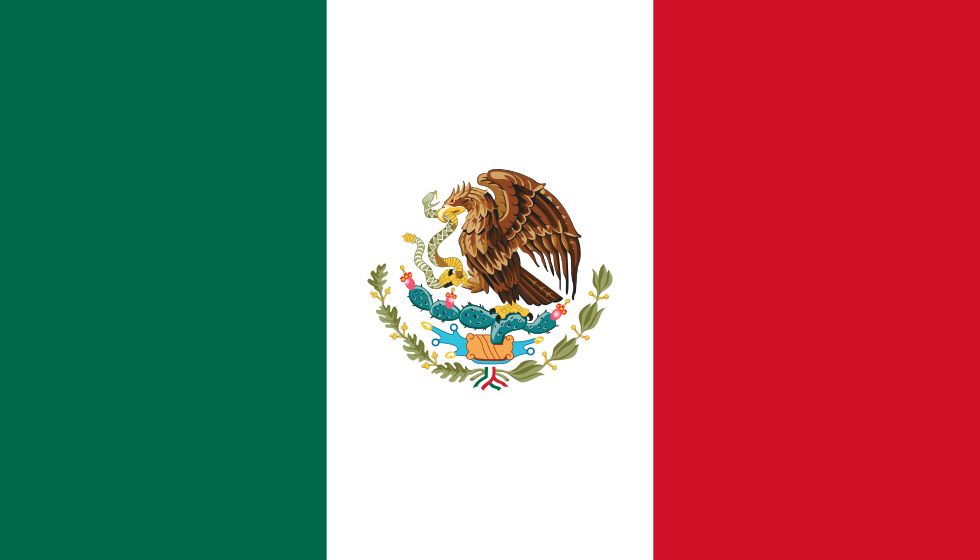
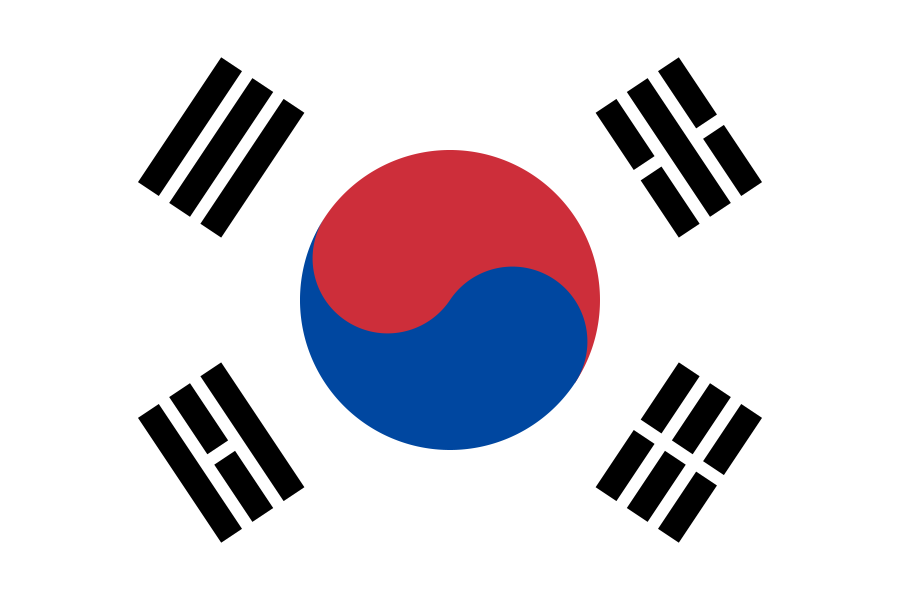
Now, a three-point lead can be enough. Mexico have demonstrated this perfectly. After winning their opening two games, they sit on six points — three ahead of South Korea, with the Czech Republic and South Africa each on one point. Crucially, Mexico have already beaten South Korea directly, meaning that even if both finish on six points, Mexico cannot be overtaken. Group A is theirs.
That certainty carries consequences. Mexico face the Czech Republic on matchday three with nothing left to play for at the top, creating a strong incentive to rest key players. The Czech Republic could benefit from a weakened opponent, though their path to automatic qualification still depends on South Korea failing to beat South Africa.
Other groups where top spot could be sealed on matchday two
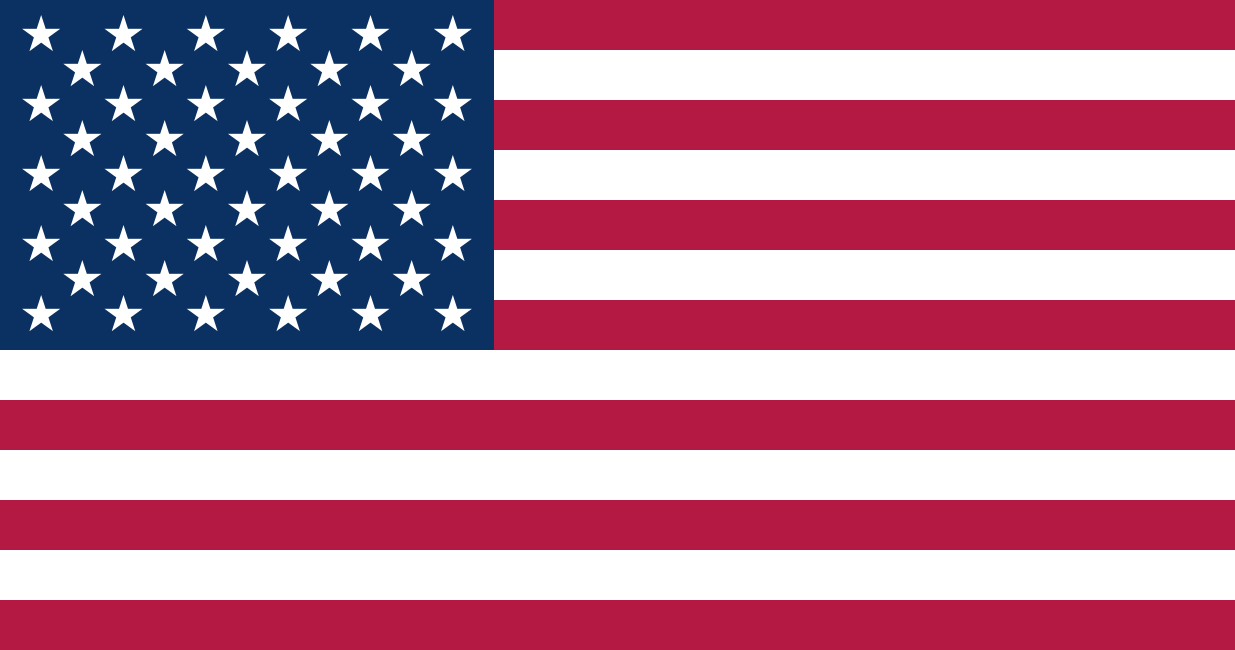
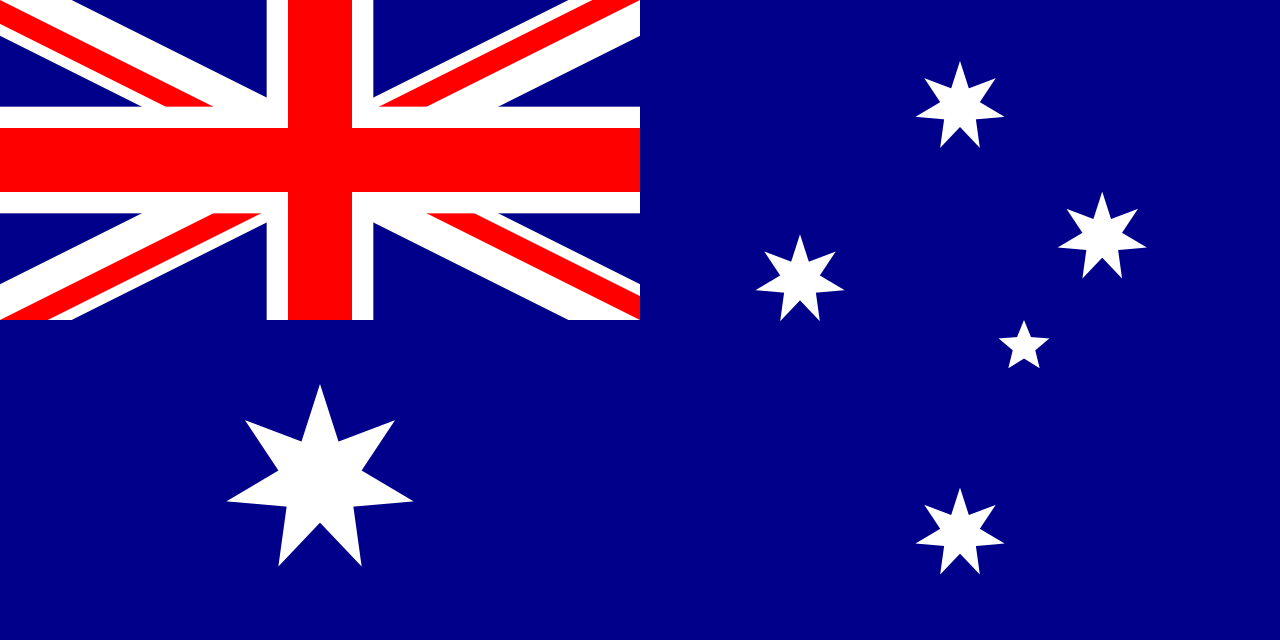
The same scenario is mathematically possible in several other groups. In Group C, Scotland would win the group by beating Morocco, provided Brazil do not beat Haiti. In Group D, the United States seal first place with a win over Australia if Turkey do not beat Paraguay — and Australia can do likewise if Paraguay do not win. In Group E, Germany top the group by beating Ivory Coast if Ecuador do not beat Curacao, while Ivory Coast can claim top spot if Curacao fail to beat Ecuador.
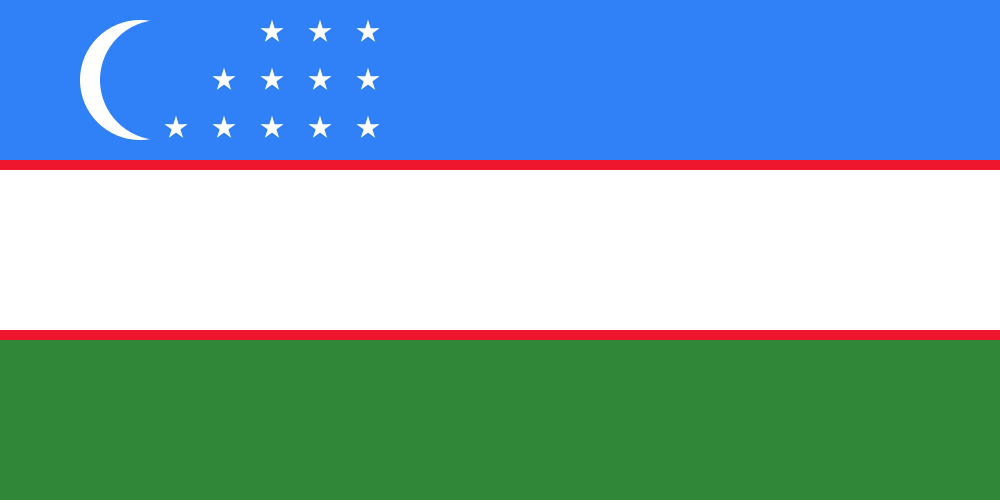
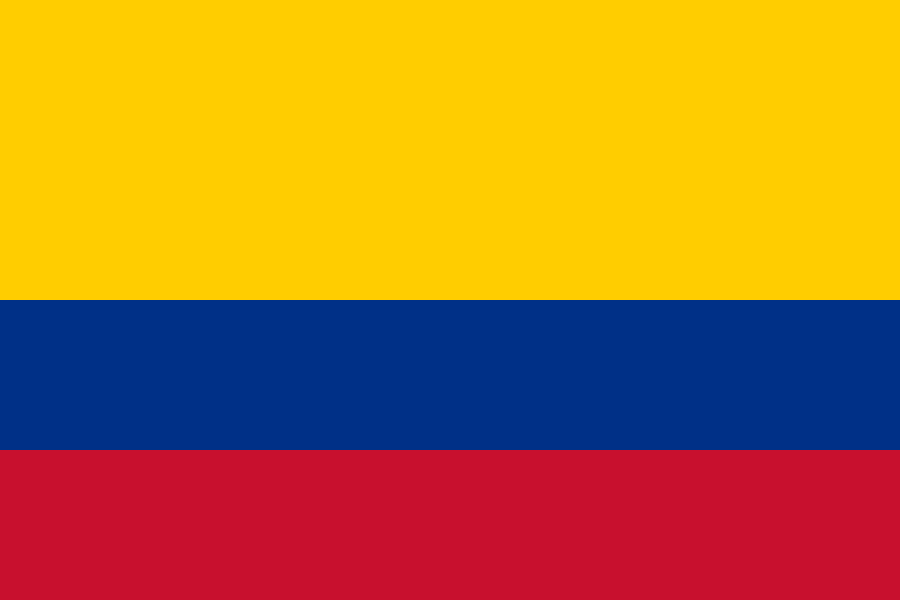
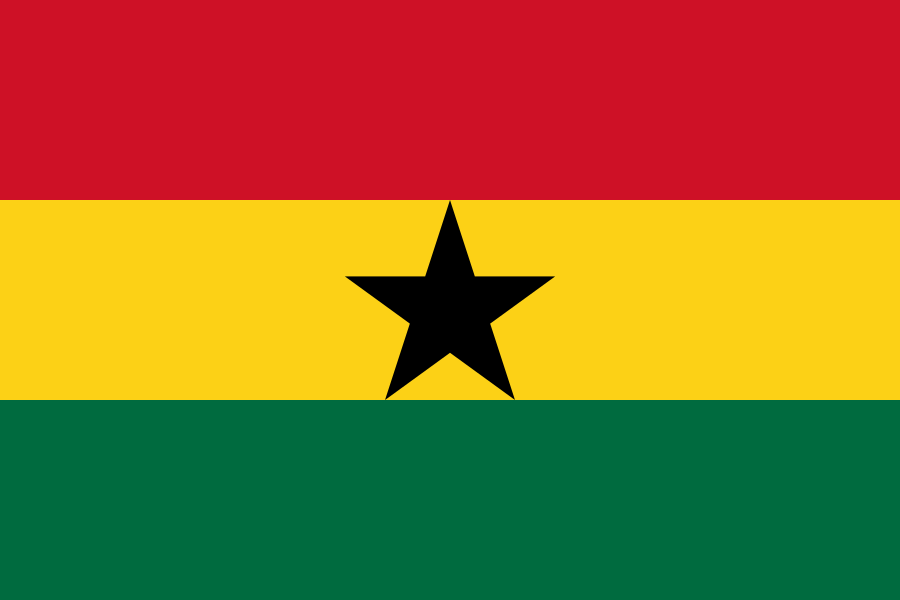
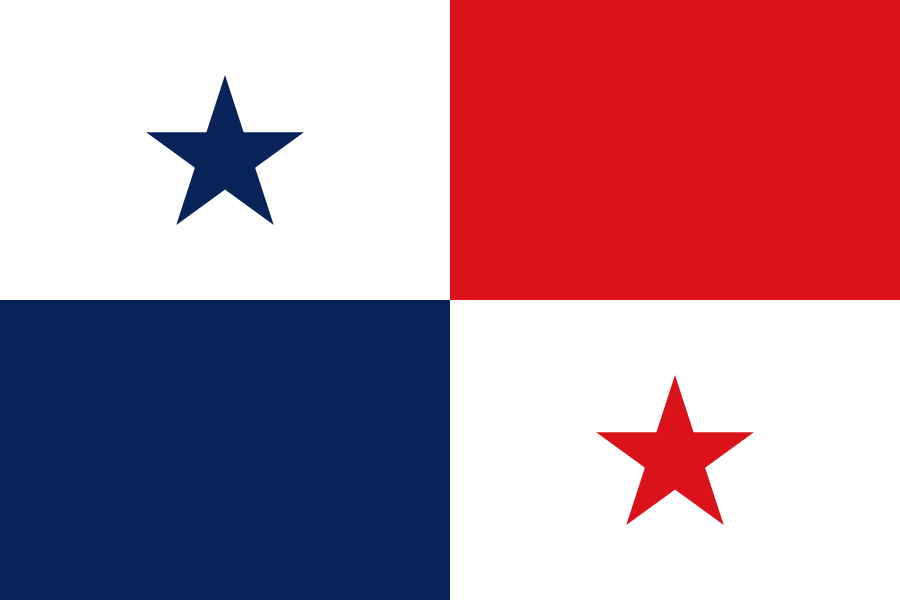
In Group F, Sweden win the group with victory over the Netherlands if Japan do not beat Tunisia. In Group J, Argentina seal top spot by beating Austria provided Jordan do not beat Algeria — with Austria able to do the same if Algeria do not win. In Group K, Colombia claim first place by beating DR Congo if Portugal do not beat Uzbekistan. In Group L, England win the group by beating Ghana if Panama do not beat Croatia — and Ghana can do the same if Croatia fail to beat Panama. Groups G, H, and I cannot have a group winner confirmed on matchday two.
The full tiebreaker order
When teams are level on points, FIFA will apply the following criteria in order: head-to-head points between the teams involved (with a mini-league created if three sides are tied, removing results against the fourth team); head-to-head goal difference; head-to-head goals scored; overall group goal difference; overall group goals scored; fair play record (yellow card –1, red card for two cautions –3, straight red card –4, yellow then straight red –5); FIFA world ranking; and, if still equal, a team's position in progressively older FIFA world rankings.
Comments
Share
Comments
Be the first to comment.